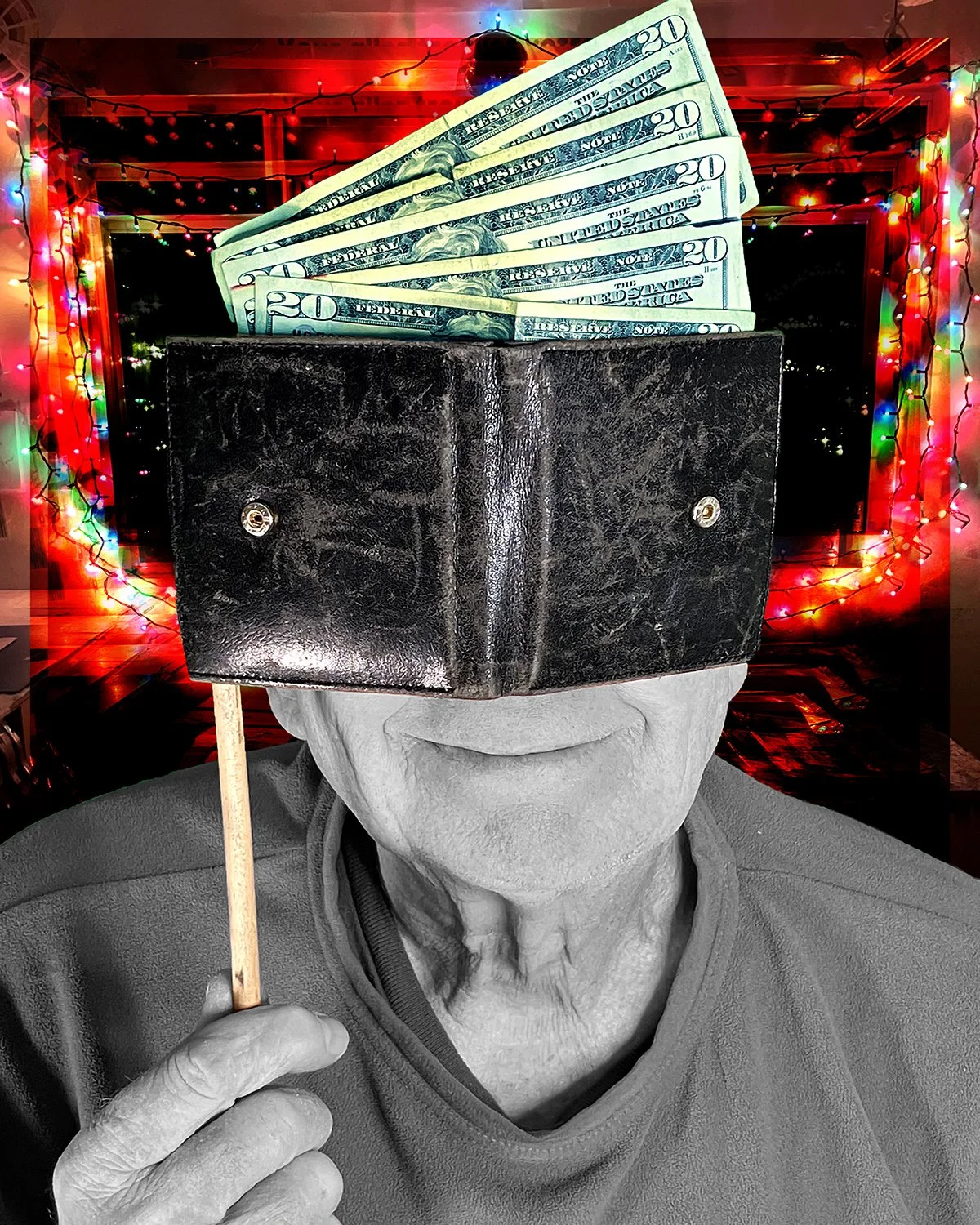
Of course I want more. I’m an artist. I always want more. I want more sales. I want more recognition. I want more shows. I want more one-person shows. I want more shows out of town at bigger and better venues. I want more followers for my social media posts. To me those things would mean success. I would know I'm making successful art.
I’ve had two one person shows. I’ve been in 20 group or invitational shows. I’ve installed two pieces of public art and served as a panelist for public art commissions twice. I occasionally sell work and I often receive grants and stipends. I’ve had shows throughout the U.S. and been in a group show in Europe. I have about 80 subscribers to my blog along with 1000 followers on Facebook and about 500 followers on Instagram..
And I’m not happy. I’m not yet making successful art, I think. What more could I achieve that would help me know I’m a success, I wonder. Wonder is too soft a word. I ponder. I pine. I pray and I connive and most importantly I pursue opportunities that could deliver more than I expected to get from them.
For anyone; artist, hobbyist, professional or entrepreneur success amounts to achievement. Wikipedia tells us success is, “the state or condition of meeting a defined range of expectations.” AI on the other hand tells me success is, “the achievement of a goal or purpose, but its meaning is subjective, ranging from wealth/fame to personal fulfillment...(and) a journey of meeting desired outcomes”.
For myself, as an artist, my idea of success is the achievement of a certain level of recognition and affirmation that will result in universal acclaim and unsolicited adulation accompanied by widespread requests to show or purchase my work. Also see the first paragraph above.
Let’s go back to “more.” The lovely reality of “more” is that it’s anticipatory. When I’m in the market for more, novelty has sway; something novel could hold the key to getting more. I’ve been rejected from shows or grants or residencies so many times I expect that will always be true but every now and again I do get in the show or am awarded a grant or residency. When I get more than I expected my brain rewards me with a chemical.
Wolfram Schultz,a Professor of Neuroscience at the University of Cambridge calls this mechanism “reward prediction error.” He writes, “Reward prediction errors consist of the differences between received and predicted rewards. They are crucial for basic forms of learning about rewards and make us strive for more rewards.”
Most dopamine neurons in the midbrain of humans, monkeys, and rodents signal a reward prediction error; they are activated by more reward than predicted” The rat who’s always gotten just one food pellet suddenly gets two and his dopamine drip goes haywire.
Dopamine,according to the Cleveland Clinic’s website, is “the ‘feel-good’ hormone. It gives you a sense of pleasure. It also gives you the motivation to do something when you’re feeling pleasure.”
Daniel Z. Lieberman and Michael E. Long , co-authored a book titled, The Molecule of More in 2018. In it Lieberman describes dopamine as, “designed to maximize future resources, ... we're constantly focused on the future, I need more. I'm not satisfied. I'm not a good enough person rather than just kind of taking a deep breath and saying wow, look at all the wonderful things I have, the good things I've done. I'm grateful for them.”
Michael Long adds, “...dopamine is all about the future, making the future better. Maximizing resources. It gives us desire and anticipation.
“From dopamine’s point of view, having things is uninteresting. It’s only getting things that matters.The dopamine circuits in the brain can be stimulated only by the possibility of whatever is shiny and new. The dopamine motto is “More.”
Enter the artist. He or she is determined to make successful art. They desire more acclaim, more adulation, more money.
Dopamine works like this: I get excited about a possible reward for attaining a goal or achievement, something that looks like it could have a real positive impact on my career. I take a chance and get an even greater payoff than I expected, dopamine kicks in and I feel great. Life is good, my art practice is really rewarding, for a while.
Then the thing that was novel and promising becomes common and familiar. I get tired and bored with the thing as the dopamine wears off, it fails to hit my brain at the original level. Dopamine deals in the future, when I have the great unexpected thing in hand, a particular gallery show, grant or big sale, it becomes normal and every day and the dopamine in my brain decreases, it’s not interested in the present. I am compelled to go out in search of new rewards with new possibilities of unexpected payoffs and a similarly intense dopamine delivery.
Long writes, “... it (dopamine) makes promises it can't keep. So, for example, you may be wanting a brand-new TV and going on the Internet, getting all excited about that TV. But as soon as you get it, things change because it's gone from the future to the present and dopamine can only process the future. So, what happens is dopamine shuts down, and that's one of the causes of buyer's remorse.
To Make Successful Art Consider What’s Enough
I have submitted to many grants, shows and residencies. For every acceptance letter I’ve received there also followed a letdown because my dopamine dope insisted I focus not on what I had, but rather on what my artist could next get. The great had become normal and I was left to go out in search of...more.
An example from my own practice: The main library in Tucson posted an artist's call about five years ago for a one person show. I worked hard to craft a competitive submission proposal. I really didn’t expect to get in. I was sure other artists did better work. But I did get in. So exciting. I was ecstatic
I visit the space. The dopamine is flowing, chugging through my veins promising me many payoffs from this show. I anticipated acclaim, honor, sales, and reviews.
I met with the librarian/curator to firm up plans. I learned there would be no opening, they would not promote the show on the library’s website and they were delaying the show for a year due to COVID. Then a good buddy artist friend said he did the same show several years ago. There was little impact on his career, he said. Suddenly my got-to-have-it show was feeling a bit mundane and common and I heard my dopamine valves squeaking slowly shut.
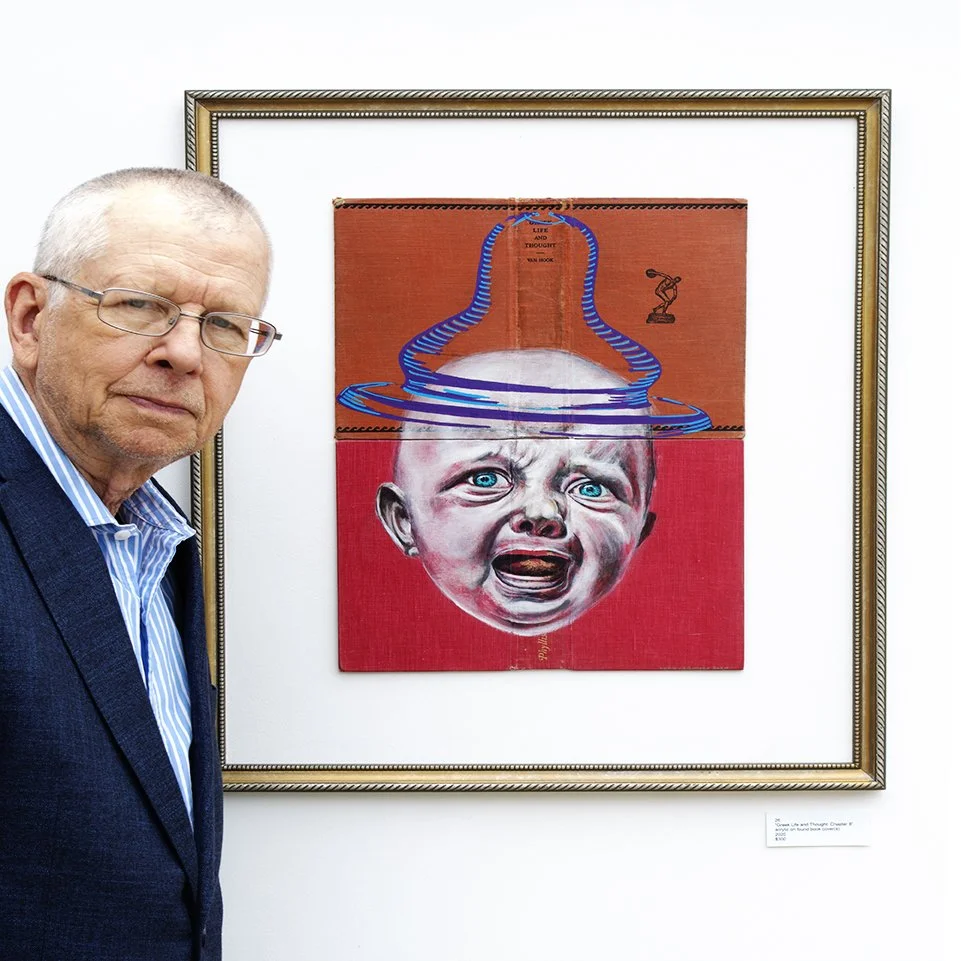
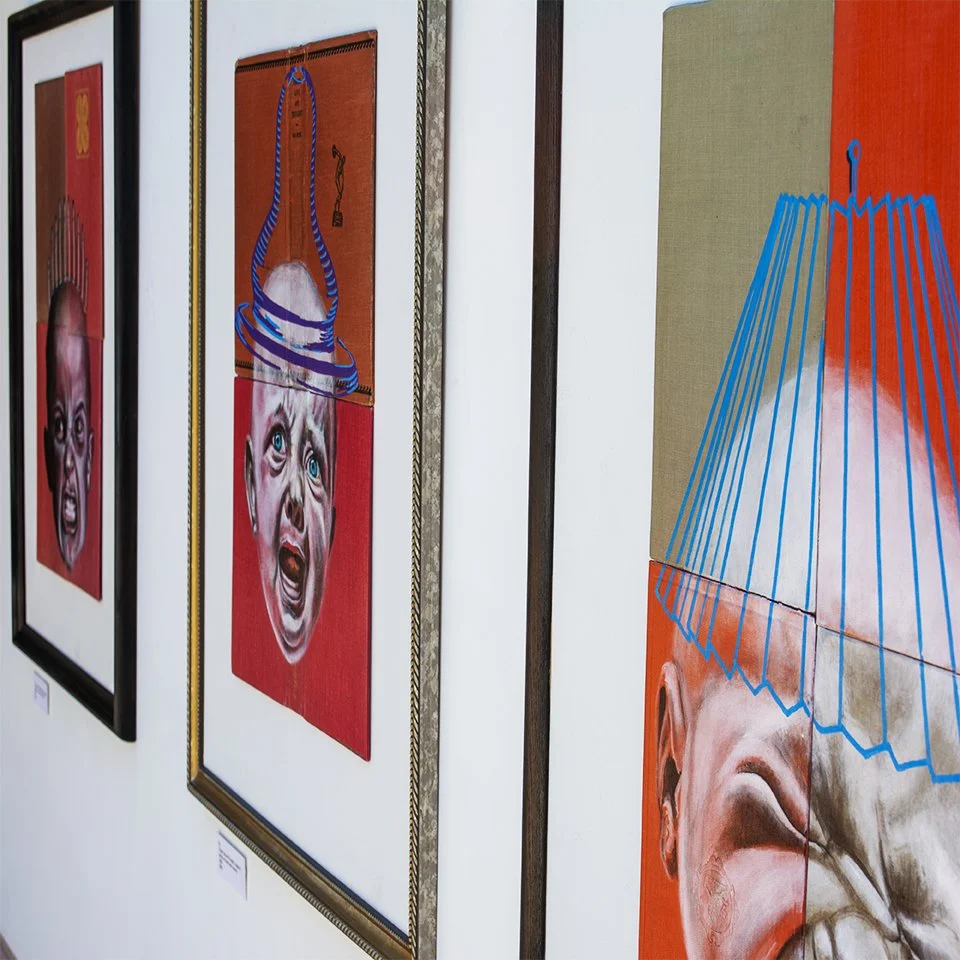
I did in fact knuckle down and produce a show of over 30 framed portraits in acrylic on found book covers. By the time it was hung my dopamine neurotransmitter had all but shut down and gone to sleep. In the words of Wolfram Schulz, “dopamine neurons...show depressed activity with less reward than predicted (negative prediction error)”
Another example: In 2005 I was awarded a commission for a temporary public art project for Encanto Park in Phoenix, Arizona. The project involved becoming certified to teach art to child survivors of domestic abuse, crafting their drawings into printed prayer flags then, using an articulated boom lift, stringing their work from a large play structure at the park.
It was an absolutely exhilarating experience and I want another now because that was then and the thrill is long gone together with the dopamine. Whoa. And the truth is I didn’t go back to sit with my creation for even 10 minutes after I finished the install. It had become mundane and common in my mind..
Dopamine can also visit me in my studio. I’m currently lusting after a pair of Pfeil brand linocut gouges. I like to create my own Christmas cards and I just know these are going to be perfect. I’ve thrilled watching other printmakers deftly handle their compact shapes. I imagine how they’ll feel and perform in my hands. I picture the exquisite details I’ll be able to cut. And it’s likely I’m full of sh_t.
Most likely: these new gouges and the Christmas cards I create with them will please some of my clients and get me a few new subscribers. The gouges have left the future where my dopamine lives and moved into the present, my studio.
Fortunately there another hormones that come into play once we get whatever it is we want. These are present moment hormones. They help us come to appreciate, enjoy, embrace and love the object, achievement or person we had long sought then found.
In the words of Liberman and Long, “In your brain the down world (the world that is down present in your hands as compared to up in the heavens and the future) is managed by a handful of chemicals, neurotransmitters (serotonin, endorphins, and oxytocin.) that let you experience satisfaction and enjoy what you have in the here and now. The down, here and now (H&N) chemicals enable you to savor and enjoy (what’s in front of you).”
“When H&N circuits are activated, we are prompted to experience the real world around us,” they write.
And thank God for the Buddhists. Brother Phap Huu, a Zen Buddhist monk in a podcast titled No Way to Happiness; Happiness Is the Way tells his host, “in the normal world we’re always looking for happiness outside of us. So, I can’t wait until I get this degree, and then I will be happy....I can’t wait until I get married and then I’m happy, etc., etc.. Happiness is not outside of you, happiness is in you and around you already. It’s whether we have the mindfulness to recognize the wonderful conditions that are there.”
Sounds like brother Phap is awash in his own bath of H&N chemicals.
After my 20-minute morning meditation today I turned on the overhead light in my studio and thought, “My God this is a great studio.” I felt immense gratitude for the gift of what I saw at my feet in the moment, a paint splattered raw plywood floor with shiny silver nail heads, Christmas lights that frame a window looking out on the Catalina mountains, shelves everywhere I crafted from found lumber and more paint than I could ever hope to use up in the yearsI have left.
In the moment I embrace what I have and for a brief second I believe it is enough.